What Materials Are Best for beer brewing equipment?
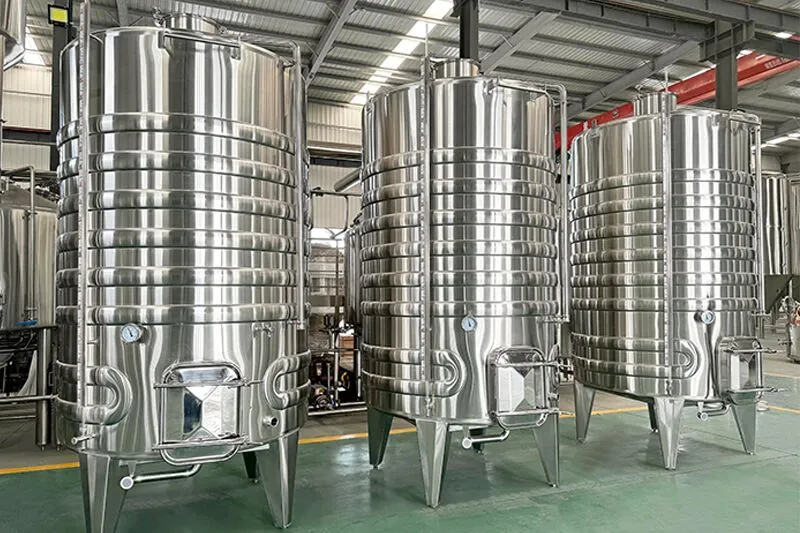
For most commercial breweries, 304 stainless steel is the standard material for tanks, kettles, fermenters, and piping, while 316 or 316L is used where chloride exposure or stronger cleaning chemistry raises corrosion risk. 304 stainless typically contains about 18% chromium and 8% nickel; 316 commonly contains 16–18% chromium, 10–14% nickel, and 2–3% molybdenum. Copper transfers heat at roughly 400 W/m·K, compared with about 16 W/m·K for stainless steel, but requires more surface care. Aluminum is lighter at about 2.7 g/cm³, yet is less tolerant of aggressive caustic cleaning. Material choice should match temperature, chemistry, pressure, welding, and sanitation requirements.
Modern brewery equipment is exposed to several operating conditions in the same production cycle. Mash vessels may run near 65–70°C, wort can approach 100°C during boiling, and fermentation vessels often operate between about 8°C and 22°C depending on beer style and yeast. Cleaning can expose the same surfaces to alkaline solutions above pH 12, followed by acid rinses and sanitizers.
That range explains why stainless steel became common in commercial systems during the 20th century. Austenitic stainless grades resist corrosion because chromium at about 10.5% or higher forms a thin passive oxide layer on the metal surface. Brewery-grade 304 contains much more chromium than that minimum, giving it good resistance to water, wort, beer, and many standard CIP chemicals.
A brewery vessel does not only need to hold liquid. It may need to handle temperature changes of more than 70°C, repeated pressure cycles, alkaline washing, acid rinsing, and thousands of production hours without developing rough or corroded product-contact surfaces.
304 stainless steel is widely used because its composition works well across most normal brewery conditions. Typical 304 chemistry includes 18–20% chromium and 8–10.5% nickel. Its density is close to 8.0 g/cm³, tensile strength is commonly around 515 MPa or higher depending on product form, and melting begins well above 1,400°C.
Those mechanical properties matter in large vessels. A 5,000-liter fermenter holds roughly 5,000 kg of liquid before the vessel weight, fittings, glycol jacket, insulation, and external hardware are added. Larger 20,000-liter tanks can carry around 20 metric tons of beer, so shell thickness, weld quality, support design, and alloy consistency matter as much as the grade stamped on the material certificate.
316 stainless steel uses a similar base chemistry but normally adds about 2–3% molybdenum. Molybdenum improves resistance to localized corrosion, especially pitting caused by chlorides. Breweries using water with higher chloride levels, coastal facilities, or cleaning programs involving stronger chemical exposure may specify 316 or 316L for selected areas.
The “L” in 316L refers to a lower carbon level, generally no more than about 0.03%, compared with up to about 0.08% for standard 316. Lower carbon content reduces the chance of chromium carbide formation around heat-affected areas during welding, which is one reason 316L is common in welded sanitary equipment.
| Material | Approx. thermal conductivity | Approx. density | Typical brewery use |
|---|---|---|---|
| 304 stainless steel | 16 W/m·K | 8.0 g/cm³ | Tanks, kettles, piping |
| 316 stainless steel | 16 W/m·K | 8.0 g/cm³ | Higher-corrosion areas |
| Copper | 390–400 W/m·K | 8.9 g/cm³ | Heat-transfer or traditional systems |
| Aluminum | 200–235 W/m·K | 2.7 g/cm³ | Small kettles, limited applications |
Thermal conductivity shows why vessel material alone does not determine heating speed. Copper can conduct heat more than 20 times faster than common stainless steel, while aluminum may conduct heat more than 10 times faster. Commercial breweries still use stainless steel because steam jackets, external heat exchangers, internal heating surfaces, and controlled circulation can provide the required heat transfer without relying on the vessel wall alone.
Copper has a long history in brewing and still appears in some traditional brewhouses. It has excellent thermal conductivity and can be easy to form, but copper surfaces oxidize and require more maintenance. Finished beer is also acidic, commonly around pH 4.0–4.6, so long product contact with reactive metal surfaces is less desirable than with properly passivated stainless steel.
Copper also behaves differently under cleaning chemicals. Strong oxidizers, acids, and alkaline products may attack copper depending on concentration and contact time. Stainless steel is normally easier to integrate into a repeatable CIP program where operators may clean vessels after every production batch, sometimes more than 300 times per year in a busy brewery.
Aluminum offers another tradeoff. At about one-third the density of stainless steel, it allows lighter vessels and portable systems. Its thermal conductivity is also much higher, which is useful in small direct-fired kettles. The limitation appears during cleaning because aluminum can be attacked by strong caustic cleaners that are commonly used in food and beverage plants.
A standard brewery CIP process may use sodium hydroxide at around 1–3%, often at elevated temperatures such as 60–80°C, although actual programs vary by chemical supplier and soil level. Stainless steel generally tolerates properly controlled alkaline cleaning well. Aluminum requires more restricted chemistry, so process flexibility can be lower when one cleaning program is expected to serve several vessels.
Carbon steel is less suitable for direct product contact because ordinary steel rusts when exposed to moisture and oxygen unless protected. It still has a place in brewery frames, stairs, platforms, supports, and external structures. Material cost may be lower than stainless steel, and painted or coated carbon steel can work well in dry structural areas.
That separation between product-contact and non-product-contact materials can reduce equipment cost. A brewery may use stainless steel for every surface touching wort, beer, water, or CIP liquid, while using carbon steel outside the sanitary boundary. The design should prevent coated steel from entering areas where repeated washdown or chemical splashing occurs.
Surface finish matters almost as much as alloy grade. Sanitary stainless steel is often specified by surface roughness, measured as Ra. Product-contact surfaces may be supplied around 0.8 μm Ra or smoother, while higher-specification pharmaceutical systems can use even lower values. A smoother brewery surface gives residue fewer deep grooves in which to remain after cleaning.
Welding can change that surface condition. Poor weld penetration, undercut, heavy oxidation, sharp internal transitions, and rough grinding can leave areas that are harder to clean. A vessel made from 316L can still perform poorly if welds are unfinished, while well-fabricated 304 equipment may remain serviceable for 20 years or more under suitable water chemistry and maintenance.
Buyers should compare alloy certificates, internal weld finish, surface roughness, passivation procedure, gasket materials, jacket pressure, and cleaning compatibility rather than treating “stainless steel” as one single specification.
Passivation is often performed after fabrication to restore a clean chromium-rich surface. Industry procedures commonly use nitric- or citric-acid-based treatments under controlled concentration, temperature, and contact time. The purpose is to remove free iron contamination left by fabrication and support formation of the passive chromium oxide layer.
Gaskets also affect material performance. EPDM, PTFE, silicone, and FKM are used in different brewery applications, but no elastomer has identical resistance to heat, steam, acids, caustic soda, alcohol, and oxidizing sanitizers. EPDM is widely used with hot water and many alkaline cleaning solutions, while PTFE offers broad chemical resistance but has different mechanical behavior.
Temperature ratings also vary by gasket formulation. Some brewery-grade EPDM products may be rated above 120°C for limited service, while silicone can handle relatively high temperatures but may swell more in certain chemicals. Seal selection should therefore be checked against the actual chemical concentration and cleaning temperature, not only against normal beer temperature.
The same principle applies to piping. Sanitary stainless tubing is generally preferred because welded or clamp-connected lines can be cleaned with the vessels. Poorly sized lines may still create cleaning problems, even with high-grade stainless steel. Flow velocity during CIP is often designed high enough to create turbulent cleaning conditions, with many systems operating around 1.5 m/s or higher depending on pipe diameter and process design.
Heat exchangers show how material and geometry work together. Stainless plate heat exchangers use thin plates, often less than 1 mm thick, to reduce the distance heat must travel through a material with relatively low thermal conductivity. Large plate surface area and turbulent flow compensate for stainless steel transferring heat much more slowly than copper.
For equipment buyers comparing Beer Brewing Equipment Manufacturers, material descriptions should therefore be read together with fabrication specifications. A quotation that lists “304 stainless steel” without stating internal finish, plate thickness, weld treatment, pressure rating, insulation, and gasket specification does not provide enough information for a proper equipment comparison.
Tank pressure provides another example. Many atmospheric mash and kettle vessels operate close to ambient pressure, while fermentation and bright beer tanks may be designed for positive pressure. Depending on brewery design, working pressures can be around 1–3 bar, and pressure-rated vessels require suitable shell thickness, certified fittings, pressure-relief devices, and tested welds.
304 and 316 can both serve in pressure vessels when the engineering design is correct. Moving from 304 to 316 does not automatically increase pressure capability because allowable pressure depends on wall thickness, vessel diameter, temperature, weld efficiency, geometry, and the design code used by the manufacturer.
Water chemistry should also be reviewed before the alloy is selected. Chloride concentration is particularly important because chloride ions can damage the passive film on stainless steel under unfavorable temperature and concentration conditions. A brewery using low-chloride municipal water may have very different requirements from a facility using chloride-rich groundwater or operating close to marine air.
Cleaning temperature can increase that concern. Corrosion behavior at 20°C may differ significantly from behavior at 70°C in the presence of chlorides and concentrated chemicals. Facilities planning hundreds of CIP cycles per year should base material choices on the strongest routine chemical exposure rather than on the composition of finished beer alone.
304 stainless steel therefore fits most standard brewery vessels because it combines corrosion resistance, weldability, strength, sanitary finishing, and reasonable cost. 316 or 316L is more suitable where chloride exposure or harsher chemistry justifies the higher price. Copper and aluminum remain useful in narrower roles, while carbon steel is generally better outside the product-contact area.
A brewery buying equipment for 10, 15, or 20 years of service should specify the entire material system: alloy grade, sheet thickness, internal Ra, weld finish, passivation, gasket type, chemical compatibility, design pressure, and cleaning temperature. Equipment life depends on that full specification more than on choosing the most expensive metal.